Blog
Alfalfa – The Deep-Rooted Nourisher

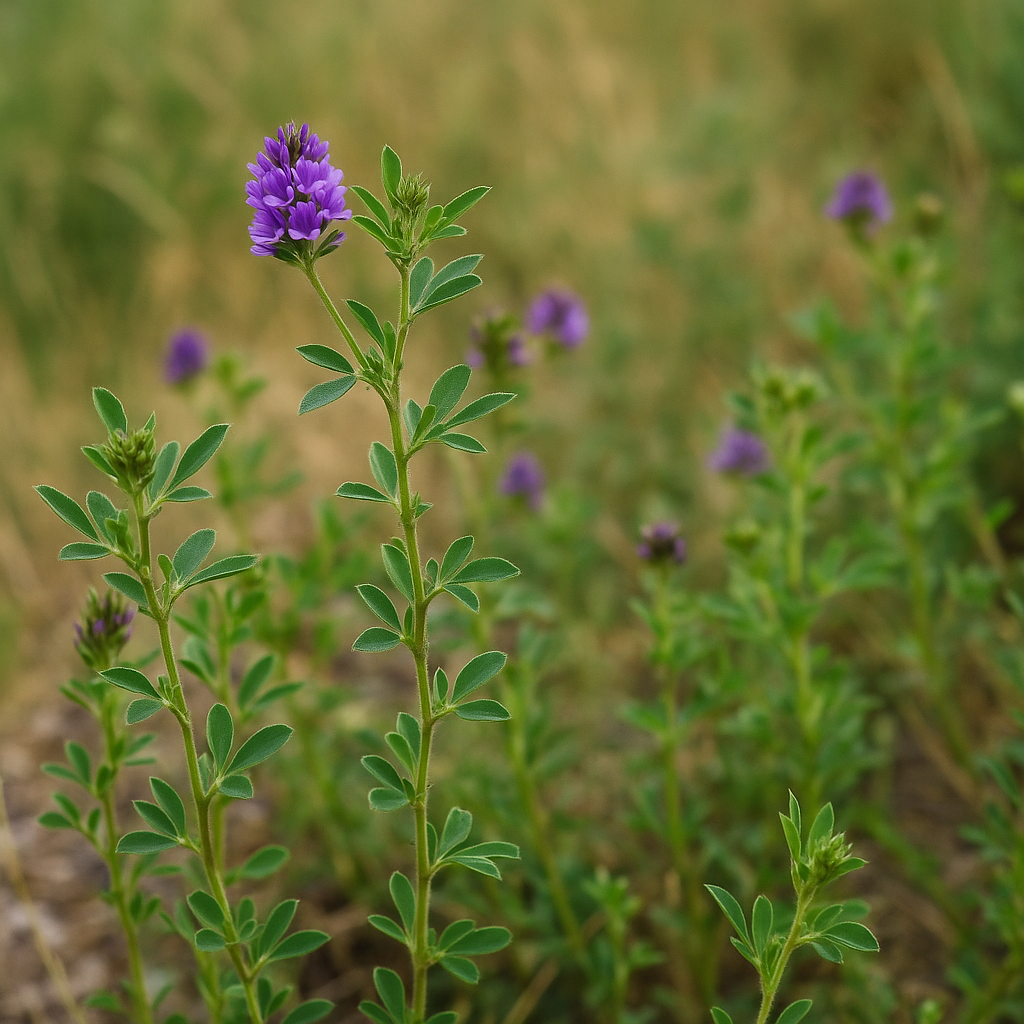
Alfalfa (Medicago sativa) is a resilient perennial plant known for its deep-reaching roots and remarkable ability to draw nutrients from the soil. Native to regions of Western Asia and widely cultivated across the world, alfalfa thrives in well-drained soils and open sunlight. The plant produces slender stems, small green leaves grouped in threes, and delicate purple blossoms that attract pollinators. Its extensive root system can reach many feet below the surface, making it one of the most nutrient-accessing plants in traditional agriculture.
Historically, alfalfa has been valued for thousands of years, particularly in ancient Persia, where it was used as a primary forage crop for horses. From there, it spread through Europe and into the Americas, becoming an important agricultural staple. Beyond its role as animal feed, alfalfa has also held a place in traditional herbal practices due to its nutrient density and connection to vitality.
In herbal traditions, alfalfa is often associated with nourishment and restoration. The leaves are rich in naturally occurring vitamins and minerals, and they have been used in teas, powders, and infusions. Because of its balanced nature, alfalfa has commonly been included in herbal blends designed to support overall wellness rather than targeting a specific condition. Its gentle profile makes it a foundational herb in many traditional preparations.
Botanically, alfalfa belongs to the legume family, which gives it the unique ability to fix nitrogen in the soil. This characteristic not only supports the plant’s own growth but also improves the surrounding soil, making it beneficial in crop rotation and sustainable farming practices. Its presence enriches the land as much as it nourishes those who use it.
Today, alfalfa remains widely respected for its traditional uses and agricultural importance. Whether grown in fields or used in herbal preparations, it stands as a symbol of deep-rooted nourishment—drawing strength from the earth and offering it back in a simple, enduring form.