Arnica – Mountain Healer of the Highlands

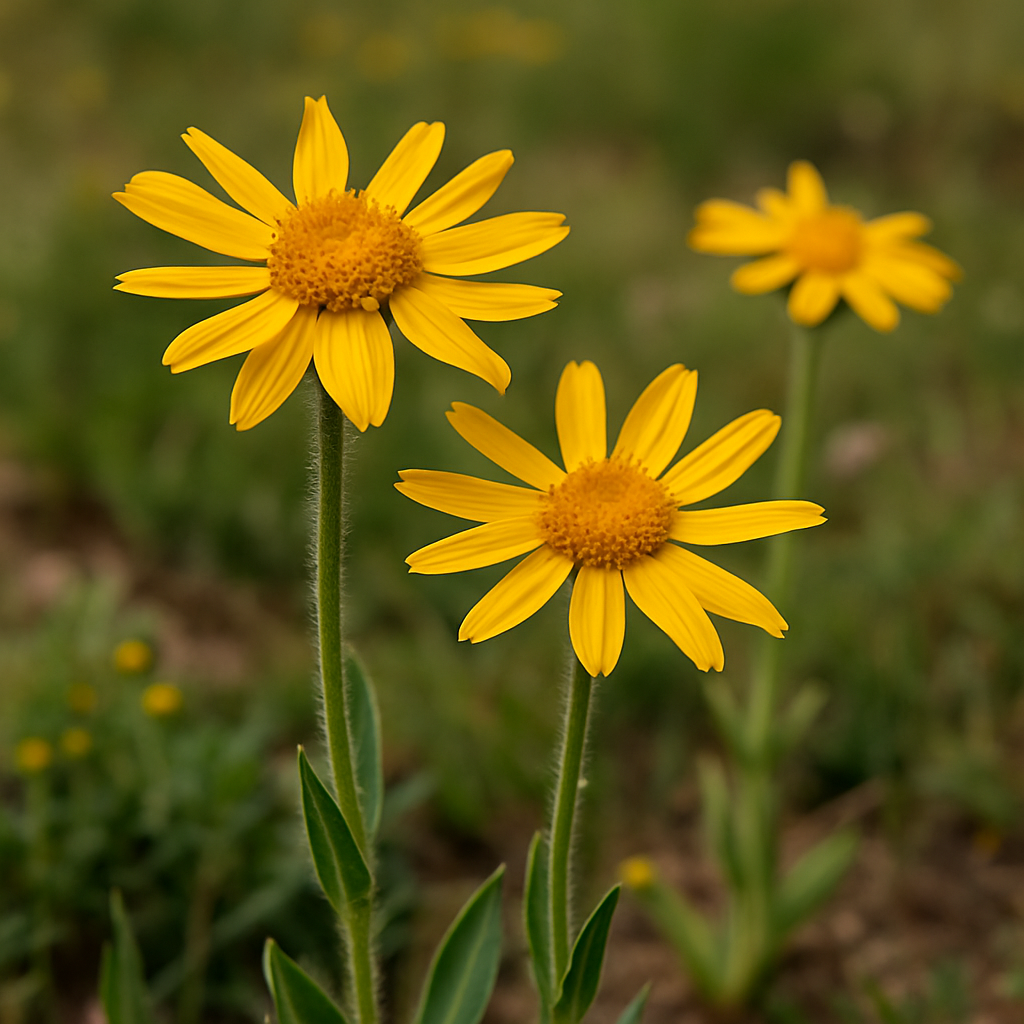
Arnica, known botanically as Arnica montana, is a hardy perennial herb native to the mountainous regions of Europe and parts of Siberia. It is easily recognized by its bright yellow, daisy-like flowers that bloom in early to mid-summer, rising above low-growing rosettes of soft, slightly hairy leaves. Arnica thrives in nutrient-poor, acidic soils and open meadows, often found in alpine and subalpine environments where few other medicinal plants persist. Its resilience in harsh conditions has long mirrored its reputation as a powerful botanical. Though visually similar to common field flowers, Arnica carries a distinct aromatic quality and has been carefully cultivated over time due to both its usefulness and its sensitivity to overharvesting in the wild.
Historical Background and Cultural Significance
The use of Arnica dates back centuries across European folk traditions, particularly in regions where mountainous terrain shaped both lifestyle and herbal knowledge. It was commonly gathered by shepherds and rural communities who relied on plant-based remedies for physical labor and injury. In traditional European herbalism, Arnica was often prepared in oils and salves, becoming a staple in households for external use. By the 18th century, it had been widely documented in early botanical texts and pharmacopoeias, and later became a prominent remedy in homeopathic medicine. Its association with healing and recovery made it a trusted plant among travelers, farmers, and those engaged in physically demanding work, reinforcing its identity as a practical herb rooted in everyday life.
Traditional and Modern Herbal Uses
Arnica has long been associated with external applications, particularly in preparations such as infused oils, creams, and salves. Traditionally, it has been used in topical blends intended to support the body following physical strain, impact, or overexertion. The plant’s flowers are the primary part utilized, often infused into oils that are then incorporated into various herbal products. In modern contexts, Arnica remains a widely recognized ingredient in topical formulations designed for general wellness and body care. It is important to note that Arnica is not typically used internally in traditional herbal practice due to its potency, and its applications have remained largely external across both historical and contemporary use.
Safety Considerations and Disclaimer
Arnica should be used with care and respect, particularly due to its strength and potential for adverse effects if misused. Internal use of Arnica in its raw or concentrated herbal form is generally not recommended. Topical applications should be limited to unbroken skin, as it may cause irritation or sensitivity in some individuals. Prolonged or excessive use may increase the likelihood of skin reactions. Individuals who are pregnant, nursing, or have underlying health conditions should consult a qualified professional before using Arnica-based products. This information is provided for educational and traditional reference purposes only and is not intended to diagnose, treat, cure, or prevent any disease.