Oregon Grape Root – Bitter Tonic of the Forest Edge

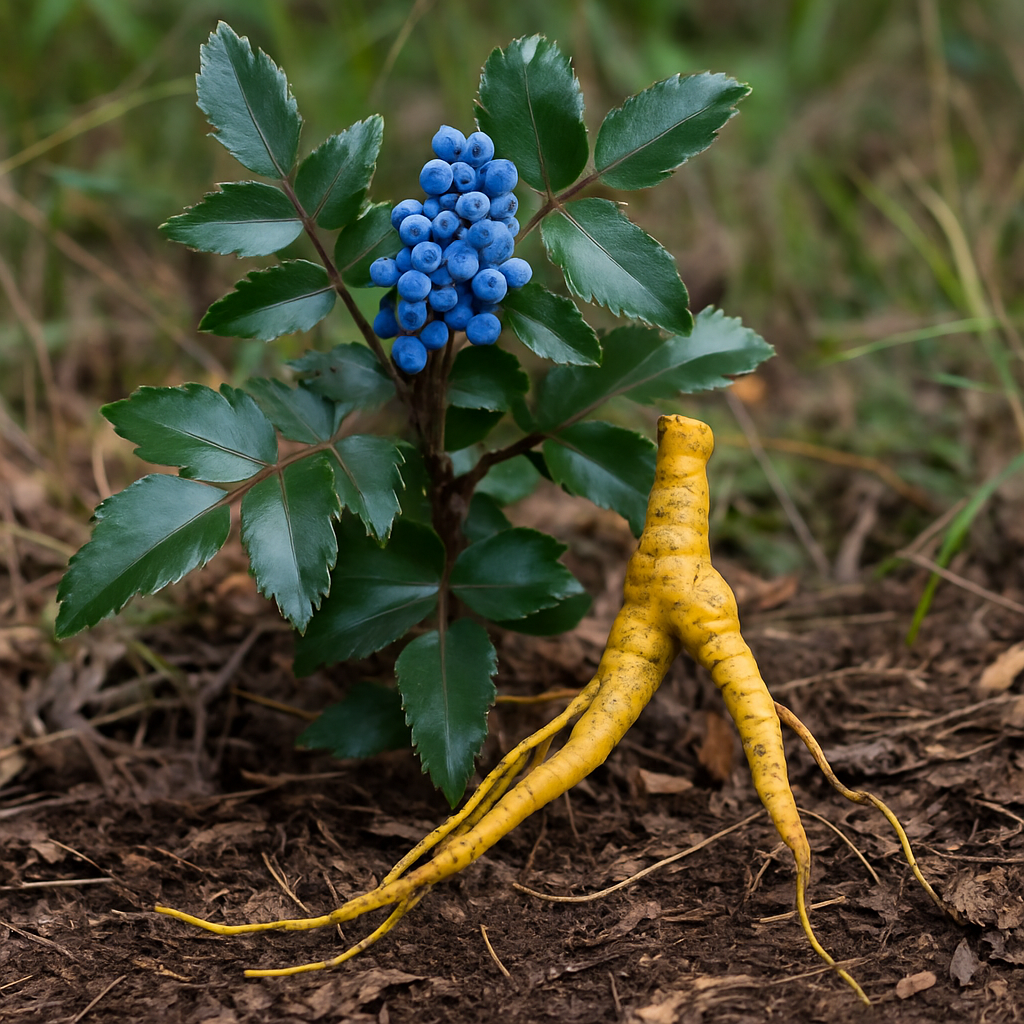
Oregon grape root, known botanically as Mahonia aquifolium, is a hardy evergreen shrub native to the Pacific Northwest and parts of western North America. It is easily identified by its holly-like, spiny leaves, clusters of bright yellow flowers in early spring, and deep blue to purple berries that follow later in the season. The plant typically grows in shaded woodlands, forest edges, and mountainous regions, thriving in well-drained soils with partial to full shade. Beneath its rugged exterior lies a vibrant yellow root and inner bark, which have long been valued in traditional herbal practices. Oregon grape spreads through underground rhizomes, forming dense colonies that contribute to soil stability and ecosystem health in its native environment.
Historical Background and Cultural Significance
Oregon grape root has a long history of use among Indigenous peoples of North America, including tribes throughout the Pacific Northwest who utilized the plant for a variety of practical and cultural purposes. The root was often prepared as a decoction or topical wash, and its rich yellow pigment was used as a natural dye for textiles and ceremonial items. As European settlers arrived, they adopted many of these traditional uses, and the plant eventually became a recognized component in Western herbalism. By the 19th century, Oregon grape root was documented in early American botanical texts and incorporated into herbal pharmacopeias. Its resilience and accessibility made it a staple among frontier communities seeking reliable plant-based resources.
Traditional and Modern Herbal Uses
In traditional herbal practice, Oregon grape root has been valued for its bitter qualities and its role in supporting general digestive and skin wellness. The root and inner bark are most commonly used, typically prepared as decoctions, tinctures, or extracts. Historically, it has been included in formulations intended to support the body’s natural processes, particularly those related to digestion and external skin applications. In modern herbal contexts, Oregon grape root remains a widely recognized botanical, often featured in wellness products that reflect these long-standing traditions. Its use continues to emphasize balance and support rather than direct intervention, aligning with its historical role in herbal systems.
Safety Considerations and Disclaimer
Oregon grape root contains naturally occurring compounds that should be approached with care, particularly when used in concentrated forms or over extended periods. It may not be suitable for individuals who are pregnant, nursing, or managing certain health conditions. Additionally, it may interact with medications or other botanicals, making it important to seek guidance from a qualified professional before use. As with all herbal materials, moderation and awareness are essential. This information is provided for educational and traditional reference purposes only and is not intended to diagnose, treat, cure, or prevent any disease.