Borage – Beloved Flower of the Bees

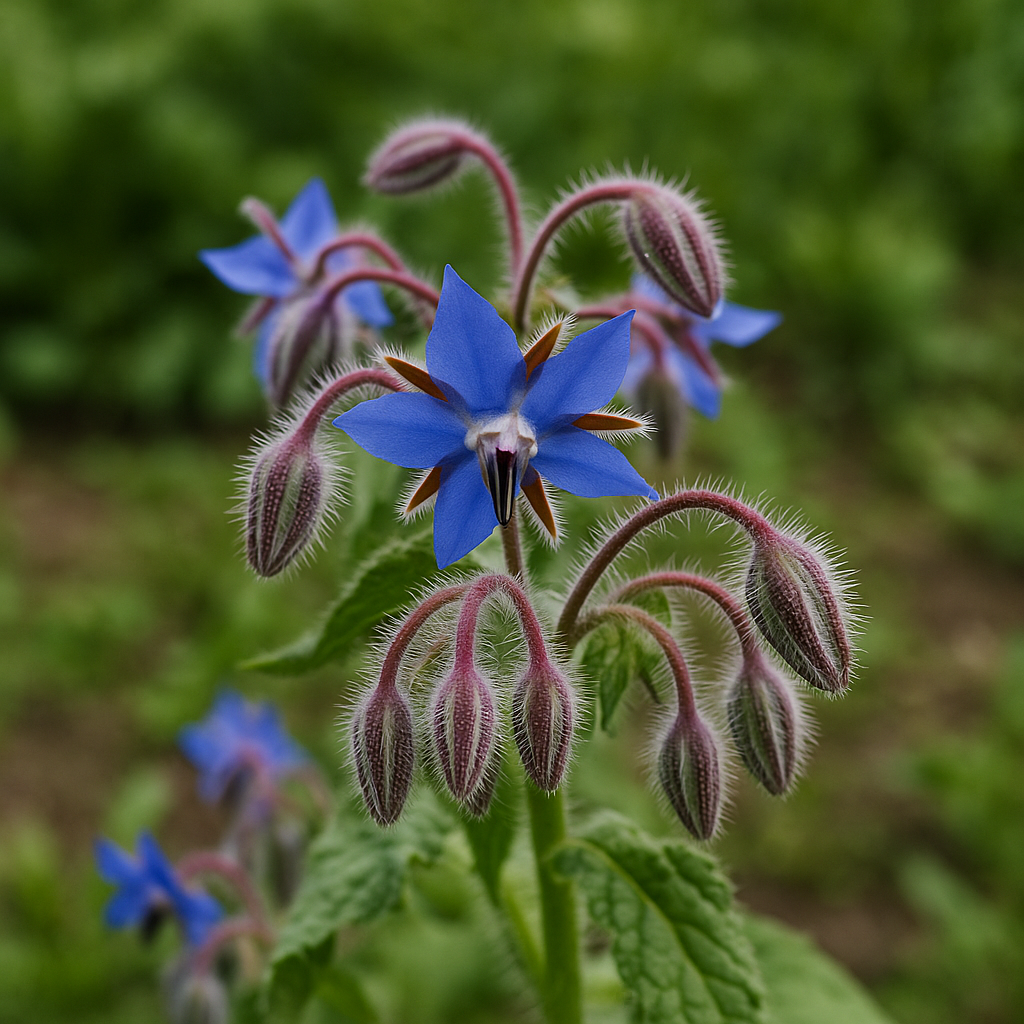
Borage, known botanically as Borago officinalis, is a vibrant annual herb recognized for its striking blue, star-shaped flowers and its ability to thrive with little care. Often referred to as “starflower,” borage grows quickly in full sun and well-drained soil, reaching heights of up to two to three feet. Its stems and leaves are covered in fine, bristled hairs, giving the plant a slightly rough texture, while its foliage carries a fresh, cucumber-like scent. Blooming from late spring through early autumn, borage readily self-seeds, often returning year after year once established. The plant is highly attractive to pollinators, particularly bees, making it a valuable addition to gardens focused on supporting local ecosystems.
Historical Background and Cultural Significance
Borage has a long and well-documented history that spans ancient civilizations and medieval Europe. Greek and Roman herbalists regarded the plant as a symbol of courage and vitality, and it was commonly infused in wine, believed to strengthen the spirit and ease apprehension. The Latin phrase “ego borago, gaudia semper ago,” loosely translated as “I, borage, bring always courage,” reflects its longstanding association with emotional fortitude. During the Middle Ages, borage was cultivated in monastery gardens and used by healers who believed it could lift the mood and restore a sense of resilience. Over time, the herb spread throughout Europe and beyond, becoming a staple in cottage gardens where it was valued for both its practical uses and symbolic meaning.
Traditional and Modern Herbal Uses
In traditional herbal practices, borage has been used in a variety of preparations, including teas, infusions, and fresh applications. The leaves and flowers were commonly incorporated into cooling drinks, particularly during warmer months, where their mild flavor added both refreshment and visual appeal. Borage has historically been associated with supporting the body during periods of stress and fatigue, as well as contributing to general wellness practices. The flowers are frequently used as an edible garnish, while the leaves have been included in herbal blends. In modern herbal contexts, borage seed oil is also widely recognized and used in various wellness products. These uses reflect long-standing traditions, though contemporary understanding continues to evolve as interest in botanical practices grows.
Safety Considerations and Disclaimer
While borage has a rich history of traditional use, it is important to approach it with awareness and moderation. Certain parts of the plant are known to contain compounds that may not be suitable for long-term or excessive use. Individuals who are pregnant, nursing, or have underlying health conditions should exercise caution. Additionally, those taking medications or managing specific health concerns should seek guidance from a qualified professional before incorporating new botanicals into their routine. This information is provided for educational purposes only and is not intended to diagnose, treat, cure, or prevent any disease.