Milk Thistle: The Traditional Liver Herb

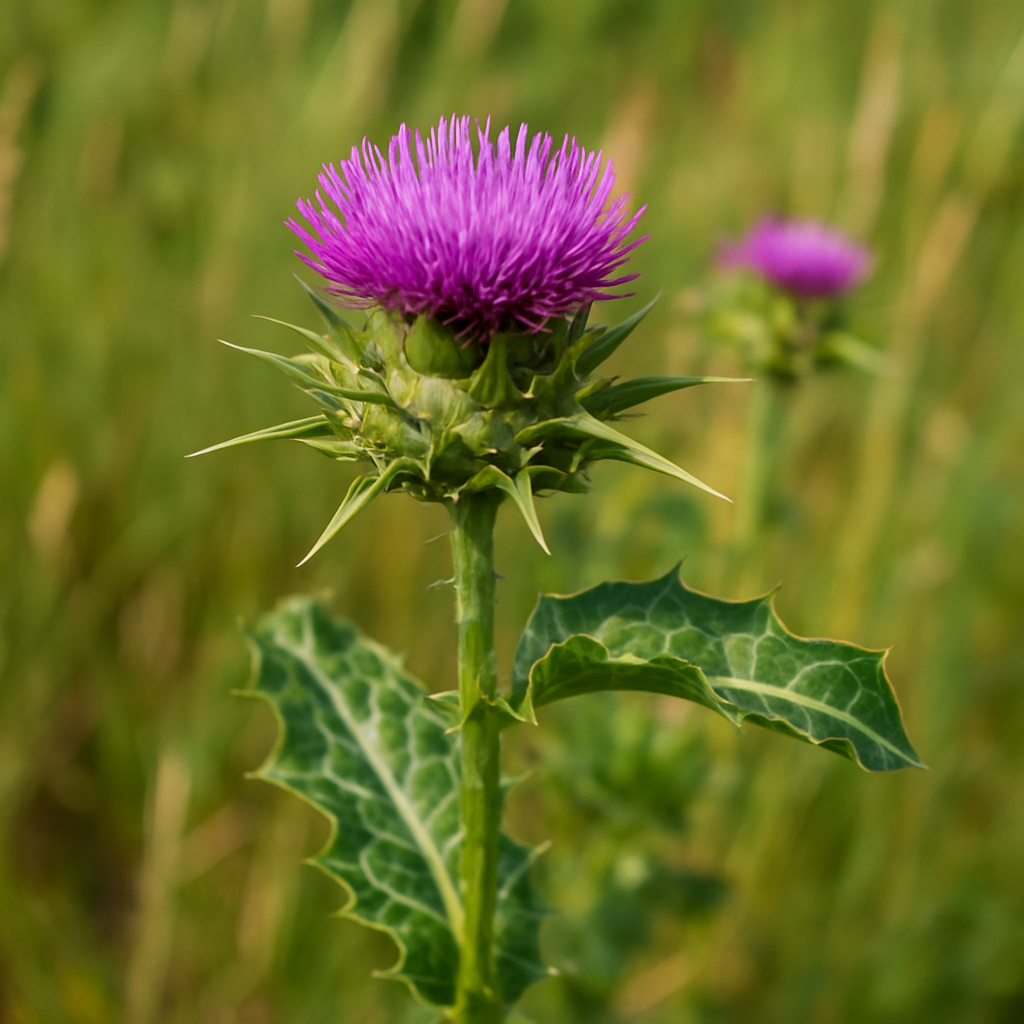
Milk thistle (Silybum marianum) is a striking member of the daisy family, recognized by its glossy green leaves marked with distinctive white veins and its purple flower heads surrounded by sharp spines. Native to the Mediterranean region, the plant has spread throughout Europe, North America, Australia, and other temperate areas. Although commonly called milk thistle, the part most valued in herbal medicine is actually the mature seed-like fruit, often simply referred to as milk thistle seed.
The plant’s unusual white-marbled leaves also gave rise to its name and some of its folklore. According to an old Christian tradition, the white markings came from drops of the Virgin Mary’s milk falling onto the leaves. This association contributed to names such as Mary’s thistle and Our Lady’s thistle and helped connect the plant historically with nursing mothers. Its much longer-lasting reputation, however, developed around the liver and digestive system.
A Long History in Herbal Medicine
Milk thistle has been used medicinally for well over a thousand years. European herbal traditions employed the plant for complaints involving the liver, gallbladder, and digestion. By the early modern period, herbalists were regularly describing thistles of this type as remedies for problems associated with the liver and spleen.
The modern interest in milk thistle is largely centered on a group of naturally occurring compounds collectively called silymarin. Silymarin is not a single chemical but a mixture of flavonolignans, with silybin, also called silibinin, being its best-known component.
Much of the scientific research on milk thistle has examined concentrated and standardized silymarin extracts rather than ordinary milk thistle tea or whole seed preparations. That distinction matters. Research performed with a standardized extract cannot automatically be used to claim that every preparation of milk thistle will produce the same effects.
Traditional Uses of Milk Thistle
Milk thistle is primarily associated with the liver. Traditional Western herbalism has used the seeds as a hepatic herb, meaning an herb used to support normal liver function. It has also been used as a digestive bitter and in preparations intended to support digestion and normal bile activity.
Modern research has investigated milk thistle and silymarin in relation to several liver conditions, including liver injury and chronic liver disease. Results have been mixed, and evidence is not strong enough to treat milk thistle as a replacement for medical care or established treatment for liver disease.
The herb’s traditional reputation nevertheless remains unusually consistent. While many plants accumulated dozens of unrelated folk uses over the centuries, milk thistle became particularly identified with the liver and has remained one of the best-known hepatic herbs in Western herbal practice.
Milk Thistle Seed and Silymarin
The active constituents of milk thistle are concentrated in the fruits commonly sold as seeds. Silymarin compounds have antioxidant properties and have been studied for their interactions with liver cells and inflammatory processes.
There is an important practical issue with traditional preparations: silymarin is poorly soluble in water. For that reason, simply steeping whole milk thistle seeds as tea does not extract these constituents particularly well.
The seeds are often ground before use and may be incorporated into food, powders, capsules, tinctures, or extracts. Commercial preparations intended specifically to provide silymarin are commonly standardized to a stated concentration.
Common Uses
Milk thistle seed is traditionally used to support normal liver and digestive function. The seeds may be freshly ground and incorporated into food or herbal preparations. They are also commonly prepared as tinctures or concentrated extracts.
When whole seeds are being used, crushing or grinding them shortly before use exposes more of the seed material. Because many of the constituents associated with milk thistle are not readily extracted into water, tea is generally not considered the most efficient preparation when silymarin content is the primary goal.
Milk thistle should not be viewed as a way to “detox” the liver after excessive alcohol consumption, medication misuse, or exposure to potentially harmful substances. The liver already performs the body’s normal metabolic and detoxification processes, and suspected poisoning or liver injury requires appropriate medical evaluation.
Safety and Precautions
Milk thistle is generally well tolerated, although digestive effects such as nausea, bloating, gas, diarrhea, or stomach discomfort can occur.
Because milk thistle belongs to the Asteraceae family, people with significant allergies to plants such as ragweed, daisies, chrysanthemums, or related species should use additional caution.
Milk thistle may also interact with medications or affect the way some drugs are metabolized. Anyone taking prescription medication, particularly for a chronic medical condition, should discuss regular or concentrated milk thistle use with a qualified healthcare professional.
Pregnant or breastfeeding individuals should seek professional guidance before medicinal use. Despite the plant’s historical association with lactation, traditional use does not establish safety during pregnancy or breastfeeding.
Anyone experiencing jaundice, unexplained abdominal swelling, persistent pain in the upper right abdomen, unusually dark urine, very pale stools, vomiting blood, confusion, or other possible signs of significant liver disease should seek medical attention rather than attempting to manage the condition with herbs.
Storage
Store dried milk thistle seed in a tightly sealed container away from direct sunlight, excessive heat, and moisture. Whole seeds generally retain their quality longer than ground material because grinding exposes more of the seed’s oils to air and oxidation. For that reason, grinding only the amount needed for relatively immediate use can help maintain freshness.
About Underground Apothecary LLC
Underground Apothecary LLC is an independent herbal company focused on traditional plant preparations and straightforward herbal education. Our Herb Library explores the history, traditional uses, preparation, and practical considerations surrounding the plants that have been part of herbal practice for generations.
The information provided in our Herb Library is intended for educational purposes and to preserve knowledge of traditional herbal practices. It is not intended to diagnose, treat, cure, or prevent any disease.
FDA Disclaimer: These statements have not been evaluated by the Food and Drug Administration. This information is provided for educational purposes only and is not intended to diagnose, treat, cure, or prevent any disease.