Motherwort: Traditional Herb of the Heart and Women’s Health

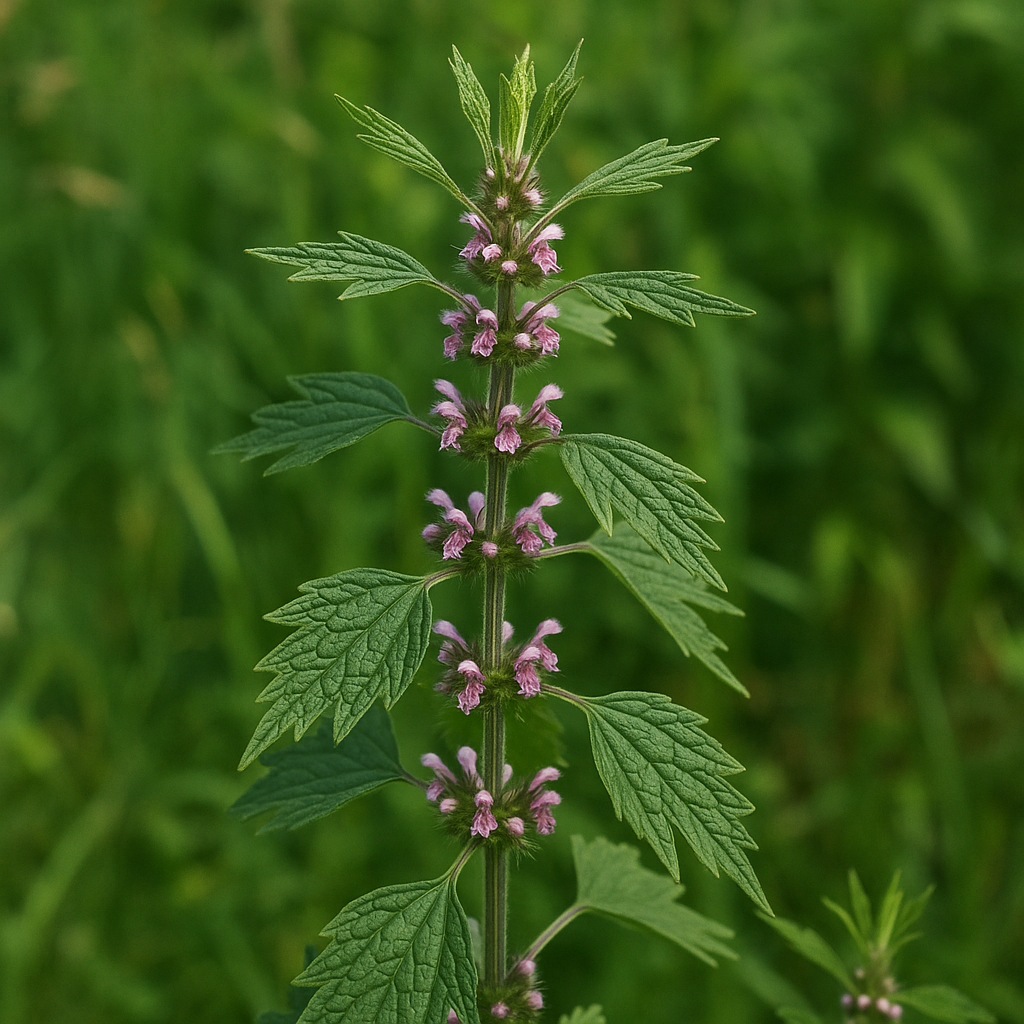
Motherwort (Leonurus cardiaca) is a perennial herb in the mint family, Lamiaceae, native to parts of Europe and Asia and now naturalized throughout much of North America. It commonly grows in disturbed ground, along roadsides, near old homesteads, and at the edges of fields and woodlands. The plant can reach several feet in height, producing deeply divided leaves and small pink to purple flowers arranged in clusters around its square stems.
Its botanical name offers a good indication of its long medicinal reputation. Leonurus roughly translates to “lion’s tail,” a reference to the appearance of the plant, while cardiaca reflects its historical association with the heart. The common name motherwort comes from its centuries-long use in European herbal medicine for conditions associated with menstruation, childbirth, and women’s reproductive health.
Motherwort is intensely bitter. Anyone expecting a mild mint-family herb is usually surprised by the taste. That bitterness is part of the plant’s traditional herbal character and one reason tinctures have become a particularly common way of using it.
A Long History in Herbal Medicine
Motherwort has a long history in European and Asian herbal traditions. European herbalists used it for complaints involving the heart, nervous system, menstruation, and childbirth. By the seventeenth century, English herbalists were describing motherwort as an herb associated with both the heart and the womb.
The plant was traditionally given when emotional tension was accompanied by a noticeably pounding or racing heartbeat. This connection between emotional distress and physical sensations in the chest became one of motherwort’s most recognizable traditional applications.
Its reputation as a women’s herb was equally important. Motherwort was used traditionally for delayed or difficult menstruation and discomfort associated with the menstrual cycle. It was also historically associated with childbirth and the period following delivery, which contributed directly to the name “motherwort.”
Those historical uses require some modern caution. An herb traditionally used to influence menstruation or uterine activity is not automatically appropriate during pregnancy.
Traditional Uses of Motherwort
Motherwort is most strongly associated with the cardiovascular, nervous, and reproductive systems in traditional Western herbalism.
As a heart herb, it has traditionally been used when nervousness, emotional strain, or anxiety was accompanied by awareness of the heartbeat. This does not mean motherwort treats heart disease or that unexplained palpitations should simply be treated with herbs. Palpitations can have many causes and should be medically evaluated when they are persistent, severe, new, or accompanied by other symptoms.
Motherwort has also traditionally been considered a nervine, particularly when tension produces physical restlessness rather than simple fatigue. Herbalists have historically used it for nervous agitation, difficulty settling down, and periods of emotional strain.
Its reproductive uses centered largely on menstruation. Motherwort was traditionally used to encourage menstrual flow and for menstrual discomfort, especially when tension and cramping occurred together.
Motherwort’s Bitter Character
Motherwort contains several groups of naturally occurring plant compounds, including alkaloids, flavonoids, iridoids, diterpenes, and other bitter constituents. One compound frequently associated with the plant is leonurine, which has received scientific attention for several possible biological activities.
Laboratory findings, however, should not be confused with established clinical effects in humans. Motherwort has considerably more history behind its traditional use than it currently has high-quality human clinical evidence supporting specific medical applications.
The plant’s strong bitterness also places it among herbs traditionally used to stimulate digestive activity. Bitter herbs have historically been taken before meals to encourage normal digestive secretions and appetite, although this is a secondary use compared with motherwort’s better-known association with the heart, nerves, and reproductive system.
Common Uses
The aerial portions of motherwort—primarily the leaves, stems, and flowering tops—are the parts normally used in herbal preparations.
Motherwort can be prepared as a tea, although its pronounced bitterness makes the tea challenging for some people. It is commonly prepared as a tincture, which allows relatively small amounts to be taken without drinking an entire cup of intensely bitter infusion.
Traditional herbal practice has used motherwort for nervous tension, occasional restlessness, menstrual discomfort, and situations in which emotional stress is accompanied by a noticeable heartbeat.
These uses reflect traditional herbal practice and should not be interpreted as evidence that motherwort can diagnose or treat cardiovascular, anxiety, hormonal, or reproductive disorders.
Safety and Precautions
Motherwort should generally be avoided during pregnancy because of its historical use for stimulating menstruation and influencing uterine activity. Its traditional association with childbirth does not make it appropriate for unsupervised use during pregnancy.
Caution is also appropriate for people taking anticoagulant or antiplatelet medications or those with bleeding disorders, as motherwort may potentially influence bleeding. It should be discontinued before surgery unless a qualified healthcare professional advises otherwise.
People taking medications for heart rhythm, blood pressure, or cardiovascular conditions should consult a healthcare professional before using motherwort medicinally. The same applies to anyone using motherwort alongside sedating medications or multiple herbal products intended to influence the nervous or cardiovascular systems.
Unexplained heart palpitations should not automatically be attributed to stress. Palpitations accompanied by chest pain, fainting, severe shortness of breath, significant dizziness, or other concerning symptoms require prompt medical evaluation.
Breastfeeding individuals should also seek professional guidance before medicinal use because reliable safety information is limited.
Storage
Store dried motherwort in a tightly sealed container in a cool, dry location away from direct sunlight and moisture. Properly stored herb should retain its characteristic green coloration and strongly bitter taste. Discard material that develops mold, unusual moisture, or an abnormal odor.
About Underground Apothecary LLC
Underground Apothecary LLC is an independent herbal company focused on traditional plant preparations and straightforward herbal education. Our Herb Library explores the history, traditional uses, preparation, and practical considerations surrounding the plants that have been part of herbal practice for generations.
The information provided in our Herb Library is intended for educational purposes and to preserve knowledge of traditional herbal practices. It is not intended to diagnose, treat, cure, or prevent any disease.
FDA Disclaimer: These statements have not been evaluated by the Food and Drug Administration. This information is provided for educational purposes only and is not intended to diagnose, treat, cure, or prevent any disease.