Cleavers: The Traditional Spring Herb of the Lymphatic System

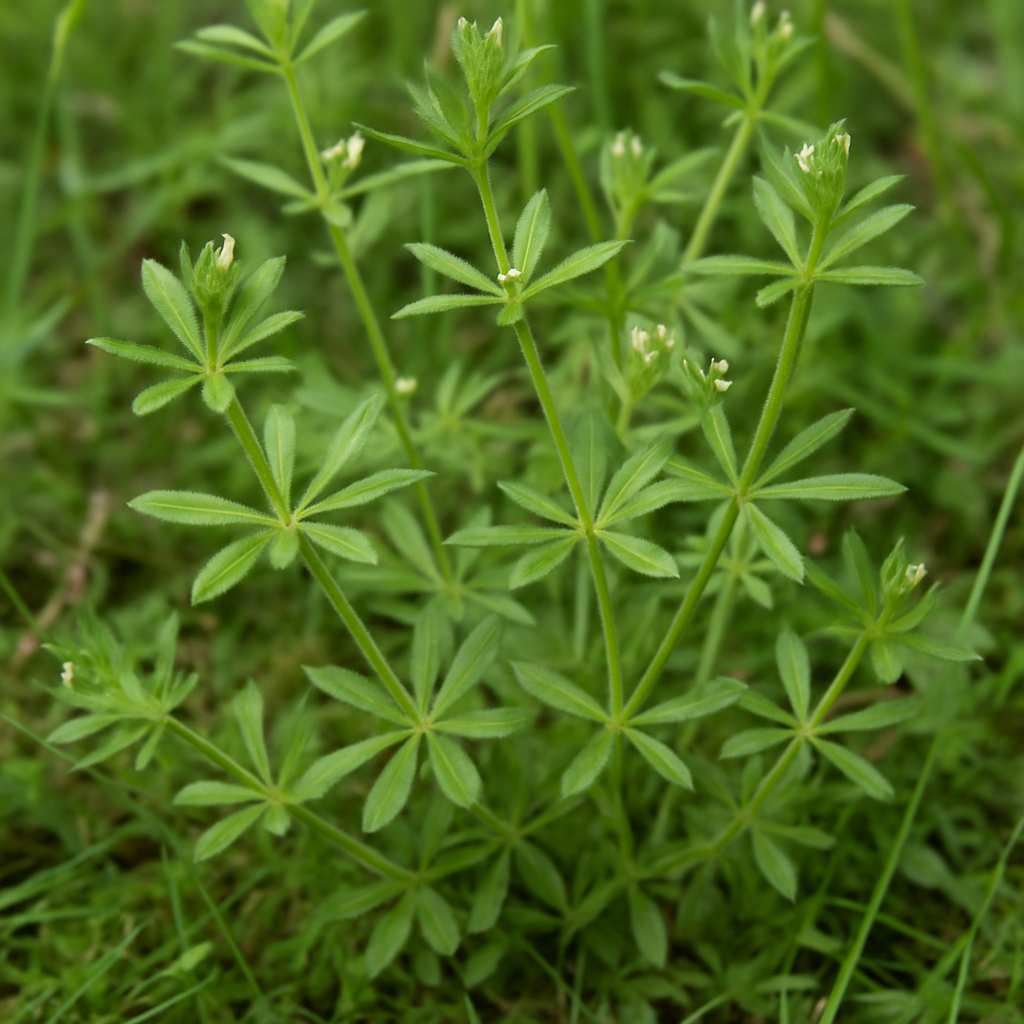
Cleavers (Galium aparine) is a familiar annual herb found throughout much of Europe, Asia, and North America. It thrives along hedgerows, woodland edges, gardens, fields, and other areas with rich or disturbed soil. The plant is easily recognized by its narrow leaves arranged in whorls around square stems and by the tiny hooked hairs covering its stems, leaves, and fruits.
Those hooks give cleavers its remarkable ability to cling to clothing, animal fur, and nearly anything else that brushes against it. This characteristic has produced a long list of common names, including bedstraw, goosegrass, stickyweed, catchweed, and grip grass.
Cleavers belongs to the Rubiaceae family, the same botanical family as coffee. Unlike coffee, however, cleavers has traditionally been valued primarily as a fresh spring herb associated with the lymphatic and urinary systems.
A Familiar Herb with a Long History
Cleavers has been used in European herbal traditions for centuries. Its tendency to grow abundantly in early spring made it one of the readily available plants gathered when fresh vegetation began returning after winter.
The name bedstraw reflects another historical use. Several members of the Galium genus were gathered and dried for bedding. Their tangled stems naturally lock together, creating a loosely woven mass of plant material that could be used to stuff mattresses.
Cleavers also developed a strong reputation as a cleansing herb. Historically, herbalists used it when there was swelling, sluggishness, or what older herbal traditions described as congestion within the body’s fluids.
Modern herbalists generally describe this traditional role more specifically as support for the lymphatic system.
Traditional Uses of Cleavers
Cleavers is one of the better-known lymphatic herbs in Western herbalism. It has traditionally been used when lymph nodes were swollen or tender and when fluid seemed to be accumulating in tissues.
The lymphatic system is an important part of normal immune function and fluid balance. Unlike the cardiovascular system, it does not have a central pump comparable to the heart. Traditional herbalists developed an entire category of herbs believed to encourage normal lymphatic movement, and cleavers became one of the most frequently used plants in that group.
Cleavers has also traditionally been used as a mild diuretic, meaning it encourages urine production. This explains its historical use for urinary complaints and occasional fluid retention.
The combination of its traditional lymphatic and urinary uses helped establish cleavers as a classic springtime herb in European folk herbalism.
Cleavers and the Skin
Traditional herbal medicine often connected the condition of the skin with the body’s ability to eliminate waste and maintain normal fluid movement. Because cleavers was associated with both lymphatic and urinary function, it was frequently included in preparations intended for chronic or irritated skin conditions.
Historically, cleavers preparations were used both internally and externally for irritated skin, minor wounds, and other skin complaints.
These traditional applications should not be interpreted as evidence that cleavers treats skin disease. Persistent rashes, unexplained lesions, infected wounds, or significant changes in the skin require appropriate medical evaluation.
Fresh Cleavers
Cleavers is somewhat unusual because many herbalists strongly favor the fresh plant.
Young aerial portions are generally harvested in spring before the plant becomes tough and heavily covered with mature seeds. Fresh cleavers may be used to prepare tinctures, infusions, or other herbal preparations.
The fresh plant has also traditionally been crushed or juiced. Because its hooked hairs create a rough texture, cleavers is not generally treated like an ordinary salad green despite being edible when young. Cooking softens these hairs, but medicinal preparations more commonly use the fresh herb as an infusion, tincture, or expressed juice.
Dried cleavers remains useful and is widely available, although some herbalists consider fresh preparations more representative of the plant’s traditional character.
Common Uses
The aerial portions of cleavers are used in herbal medicine, including the stems and leaves and, depending on the time of harvest, the flowering portions.
Cleavers is traditionally used to support normal lymphatic movement and urinary function. It is commonly prepared as an herbal infusion or tincture and has historically appeared in formulas intended for temporary swelling, lymphatic congestion, and urinary support.
Cleavers is sometimes described as a “detox” herb, but that modern term can be misleading. The body has its own systems for processing and eliminating metabolic waste. Traditional use of cleavers is more accurately described in terms of its historical association with lymphatic movement and urinary output rather than claiming that it removes unspecified “toxins” from the body.
Safety and Precautions
Cleavers is generally considered a relatively gentle herb when used in normal amounts, but its diuretic action deserves consideration.
People taking prescription diuretics, medications affecting fluid or electrolyte balance, or medications for kidney or cardiovascular conditions should consult a qualified healthcare professional before using cleavers regularly.
People with kidney disease, significant edema, or unexplained fluid retention should not attempt to treat these conditions simply by increasing diuretic herbs. Swelling can have numerous causes, some of which require medical evaluation.
Pregnant or breastfeeding individuals should seek professional guidance before medicinal use because adequate safety information is limited.
As with any wild-harvested herb, correct identification is essential. Cleavers should also be collected away from roadsides, chemically treated areas, contaminated soil, and locations frequented heavily by animals.
Storage
Dried cleavers should be stored in a tightly sealed container in a cool, dry place away from direct sunlight and moisture. Because the aerial portions are relatively delicate, excessive exposure to heat, light, and air can quickly diminish their quality.
Fresh cleavers should be processed soon after harvesting rather than stored for extended periods. Any plant material showing mold, excessive moisture, discoloration, or an unusual odor should be discarded.
About Underground Apothecary LLC
Underground Apothecary LLC is an independent herbal company focused on traditional plant preparations and straightforward herbal education. Our Herb Library explores the history, traditional uses, preparation, and practical considerations surrounding the plants that have been part of herbal practice for generations.
The information provided in our Herb Library is intended for educational purposes and to preserve knowledge of traditional herbal practices. It is not intended to diagnose, treat, cure, or prevent any disease.
FDA Disclaimer: These statements have not been evaluated by the Food and Drug Administration. This information is provided for educational purposes only and is not intended to diagnose, treat, cure, or prevent any disease.