Top Cooking Herbs from Mexico: Tradition, Flavor, and the Living Use of Plants

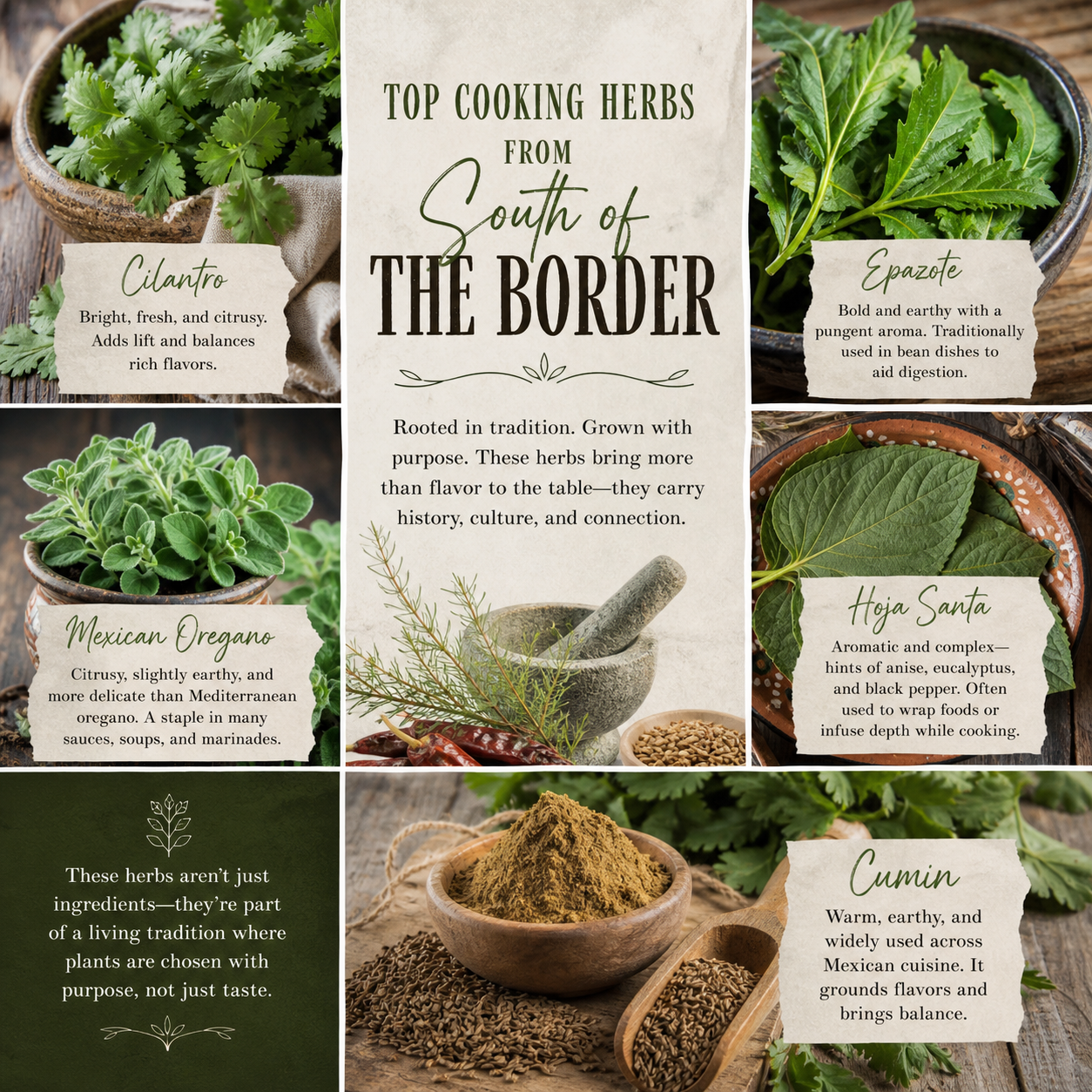
The culinary traditions of Mexico are not built on heat alone, nor on novelty, but on a deep and deliberate relationship with plants. Herbs are not added as an afterthought—they are foundational. They shape aroma before a dish ever reaches the table. They balance richness, temper intensity, and carry forward knowledge that has moved through generations, kitchens, and regions without losing its purpose.
To understand these herbs is to understand that they are chosen not only for flavor, but for how they behave—how they interact with other ingredients, how they support digestion, and how they define the identity of a dish. What follows is not a surface-level list, but a closer look at the core herbs that continue to shape traditional cooking.
Cilantro (Coriandrum sativum)
Cilantro is one of the most recognizable top cooking herbs from Mexico. It is prominent in Mexican cuisine, but its role is often misunderstood. It is not simply a garnish. It is used to lift, brighten, and cut through the weight of slow-cooked meats, beans, and rich sauces.
Fresh cilantro carries a sharp, green, almost citrus-like edge. When added at the right moment—typically toward the end of cooking or just before serving—it brings balance. It interrupts heaviness and gives clarity to otherwise dense flavors. In salsas, it works in tandem with lime to create that unmistakable freshness that defines many dishes.
It is worth noting that cilantro’s flavor is polarizing to some, but in traditional use, it is rarely meant to dominate. It is meant to sharpen the edges of everything else around it.
Epazote (Dysphania ambrosioides)
Epazote is one of the most culturally rooted herbs in Mexican cooking, yet it remains unfamiliar to many outside of it. Its aroma is strong—earthy, resinous, and at times described as medicinal. It is not meant to be used lightly or casually.
Traditionally, epazote is added to bean dishes, particularly black beans. Its purpose extends beyond flavor. It has long been used to make beans more digestible, reducing the heaviness that often accompanies them. This dual role—flavor and function—is a recurring theme in traditional herbal use.
When cooked, epazote softens and integrates into the dish, leaving behind a depth that cannot be easily replaced. It is not a substitute herb. If it is missing, the dish changes in a noticeable way.
Mexican Oregano (Lippia graveolens)
Mexican oregano is often confused with Mediterranean oregano, but they are not interchangeable. While Mediterranean oregano leans toward a warm, slightly bitter profile, Mexican oregano is brighter, with subtle citrus and earthy undertones.
It is commonly used in sauces, stews, and marinades where longer cooking times allow its flavor to fully develop. It holds up well under heat, making it a backbone herb in many traditional preparations.
The distinction matters. Substituting one for the other changes the character of a dish. Mexican oregano contributes a different kind of lift—less dense, more aromatic, and more aligned with the broader flavor structure of regional cooking.
Hoja Santa (Piper auritum)
Hoja santa is one of the more complex herbs in traditional Mexican cuisine. Its large, heart-shaped leaves carry a layered aroma that can include notes of anise, eucalyptus, black pepper, and even subtle sweetness.
It is often used as a wrapping leaf, encasing fish, meats, or masa-based preparations before steaming or cooking. In this form, it acts as both a flavoring agent and a protective layer, infusing the contents while maintaining moisture.
Hoja santa is not a background herb. It introduces a distinct profile that defines the dish it is used in. Its presence is intentional and unmistakable, often tied to specific regional traditions, particularly in southern Mexico.
Cumin (Cuminum cyminum)
Cumin is widely used across many cuisines, but in Mexican cooking, it serves a specific purpose: grounding. It brings warmth, depth, and cohesion to spice blends and slow-cooked dishes.
Its flavor is earthy and slightly nutty, with a subtle bitterness that balances brighter elements like chili and citrus. In dishes that rely on multiple layers of flavor, cumin acts as a unifying force, tying everything together.
It is rarely used in isolation. Instead, it works alongside other ingredients, reinforcing structure rather than drawing attention to itself.
Bay Leaf (Laurus nobilis)
Bay leaf is often overlooked because it is not meant to be tasted directly. Its contribution is subtle, but essential. When simmered in soups, broths, and stews, it releases a gentle bitterness and depth that rounds out the dish.
In Mexican cooking, bay leaves are commonly added to beans, rice, and slow-cooked meats. They provide a foundation that supports other herbs and spices without competing with them.
Removing the bay leaf before serving is standard, but its presence during cooking leaves a lasting imprint that would be missed if omitted.
Mexican Mint Marigold (Tagetes lucida)
Sometimes referred to as Mexican tarragon, this herb offers a similar anise-like flavor but is more suited to warmer climates where traditional tarragon struggles to grow.
It is used both fresh and dried, often in sauces, teas, and as a finishing herb. Its flavor is softer than hoja santa but still carries that distinctive licorice note.
Beyond cooking, it has historical use in ceremonial and medicinal contexts, further reinforcing the connection between culinary and traditional plant knowledge.
Culantro (Eryngium foetidum)
Culantro is often mistaken for cilantro due to its similar name, but its flavor is stronger, deeper, and more robust. It is used in some regional dishes where a more intense herbal presence is needed.
Unlike cilantro, which is often added fresh at the end, culantro can withstand longer cooking times. It integrates into soups and stews, providing a sustained herbal note throughout the dish.
Its use is more regional, but where it appears, it is chosen deliberately for its strength and staying power.
A Living Tradition
What defines the top cooking herbs from Mexico is not just how they taste, but how they are used. They are part of a system where flavor, function, and tradition are inseparable. Recipes are not built from isolated ingredients, but from an understanding of how those ingredients behave together.
There is no excess for the sake of excess. Each herb has a role. Each addition is intentional.
To cook with these herbs is to participate in something that extends beyond the kitchen. It is to work with plants in a way that respects their history, their purpose, and their place in a much larger tradition.
The difference is not in having access to these herbs—it is in knowing how to use them, and more importantly, why.