Wild Violet – The Quiet Healer of Shaded Places

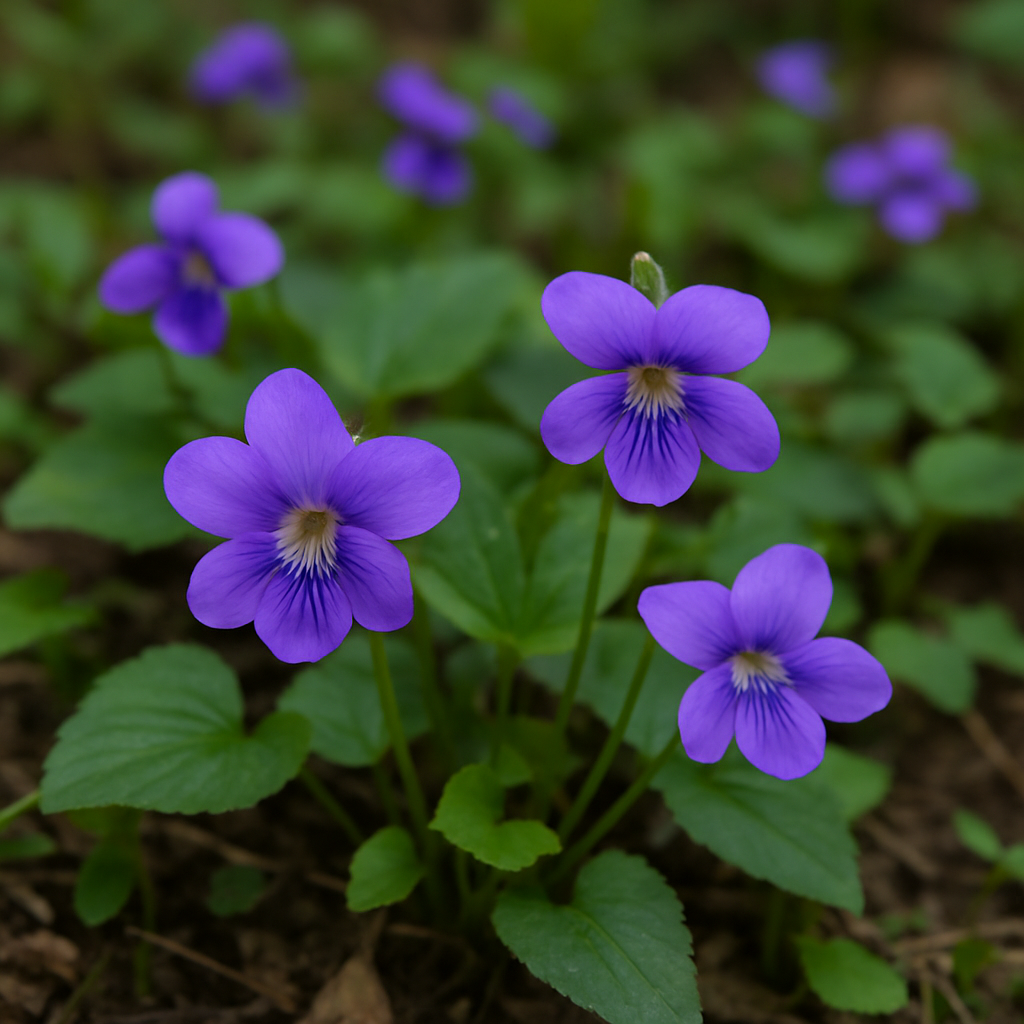
Wild violet, known botanically as Viola odorata, is a low-growing perennial plant recognized for its heart-shaped leaves and delicate, fragrant flowers that range from deep violet to soft lavender and white. It thrives in shaded woodlands, meadows, and garden edges, often appearing in early spring as one of the first signs of the season’s renewal. The plant spreads gently through both seeds and creeping rhizomes, forming small clusters that can quietly expand over time. Its leaves are tender and green, while its blossoms carry a subtle sweetness that has made it a cherished plant in both natural landscapes and cultivated spaces. Wild violet prefers moist, well-drained soil and partial to full shade, making it well suited to forest floors and sheltered garden beds.
Historical Background and Cultural Significance
Wild violet has a long and rich history across Europe, Asia, and North America, where it has been appreciated for both its beauty and its symbolic meaning. In ancient Greece, violets were associated with love, fertility, and protection, often used in garlands and ceremonial offerings. The Romans valued the plant for its fragrance and incorporated it into wines and perfumes. During the Middle Ages, violets became a symbol of humility and devotion, frequently appearing in herbal manuscripts and monastic gardens. Over time, the plant found its way into traditional practices across cultures, where it was used in culinary preparations, infused into syrups, and included in seasonal rituals celebrating renewal and gentleness.
Traditional and Modern Herbal Uses
In traditional herbal practice, wild violet has been associated with soothing and cooling properties, often used in preparations intended to support the respiratory system and ease minor skin discomforts. The leaves and flowers are commonly used in teas, syrups, and infusions, valued for their gentle nature and mild flavor. Violet preparations have also been included in topical applications, where they are traditionally used in salves and compresses. In culinary use, the flowers are sometimes candied or added to salads and desserts, providing both visual appeal and a subtle sweetness. Modern herbal traditions continue to draw from these historical uses, incorporating wild violet into blends that reflect its longstanding role as a mild and supportive botanical.
Safety Considerations and Disclaimer
Wild violet is generally considered a gentle herb when used appropriately, but it should still be approached with awareness and moderation. As with all botanicals, proper identification is essential, as not all violet species share the same properties. Individuals who are pregnant, nursing, or taking medications should consult a qualified professional before using herbal preparations. This information is provided for educational and traditional reference purposes only and is not intended to diagnose, treat, cure, or prevent any disease.