Foxglove – Bells of Beauty and Quiet Danger

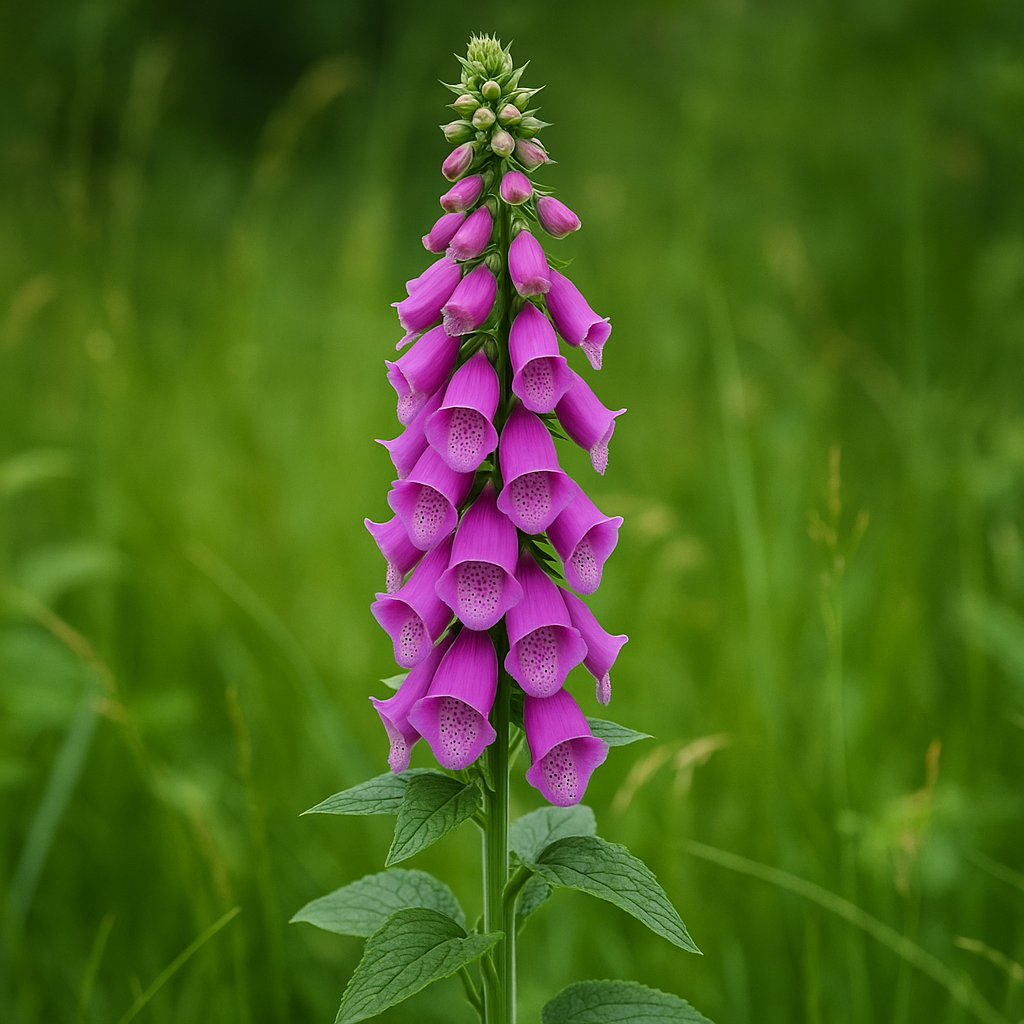
Foxglove is a striking and unmistakable plant, known for its tall spires of tubular, bell-shaped flowers that rise dramatically from a base of soft, textured leaves. Commonly found along woodland edges, gardens, and shaded pathways, foxglove (Digitalis purpurea) carries a presence that feels both ornamental and powerful. Its blossoms range from deep purples to soft pinks and whites, often marked with intricate speckling inside each bell. While admired for its beauty, foxglove has long been recognized as a plant that commands respect due to its potent chemical properties.
Historical Background and Cultural Significance
Foxglove holds a deep place in European folklore, particularly within the British Isles, where it was often associated with the hidden world of the fae. The name itself is believed by some to derive from “folk’s glove,” referring to the fair folk who were said to wear the blossoms as gloves or caps. In other traditions, foxglove was considered a plant of enchantment, sometimes linked to witches and spirits, and was handled with caution or ritual awareness.
Historically, foxglove also played a pivotal role in early medicine. While it was known in folk practices long before, it became widely recognized for its powerful effects on the human body when studied more formally. Its legacy in herbal history is one of transformation—from mysterious woodland plant to one of the most studied botanicals in relation to the heart.
Traditional and Modern Herbal Uses
Foxglove is not a typical herb used in home herbalism, and its role differs significantly from more commonly used plants. Historically, it was used in very controlled and minimal amounts due to its strength, but this required precise knowledge and carried significant risk.
In modern contexts, foxglove is not used in raw or homemade preparations. Instead, its compounds have been isolated and studied in controlled medical environments. As a result, foxglove is best understood today as a plant of historical and scientific importance rather than a practical herb for personal use. It serves as an example of how powerful plant chemistry can be when handled correctly, but also how dangerous it can be outside of proper controls.
Safety Considerations and Disclaimer
Foxglove is highly toxic, and all parts of the plant—including leaves, flowers, stems, and seeds—contain compounds that can interfere with heart function. Ingestion can lead to serious health consequences and may be fatal. Foxglove should never be used in teas, tinctures, smoking blends, or any form of internal or topical preparation.
When growing or handling foxglove, care should be taken to avoid accidental ingestion, especially around children and pets. It is best appreciated as an ornamental plant or as part of historical herbal study rather than as a usable remedy.
This information is provided for educational and traditional reference purposes only. It is not intended to diagnose, treat, cure, or prevent any disease. Always consult a qualified healthcare professional before using any herb for medicinal purposes.
Additional Reading
Our Blog contains practical tips for everyday herbalists