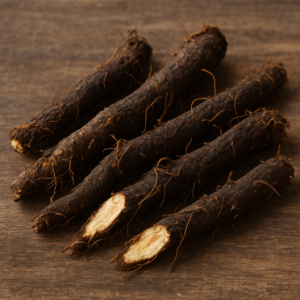
Galangal – The Root of Fire and Eastern Kitchens


Galangal is a bold and aromatic root long valued in traditional cooking and herbal practice. Known botanically as Alpinia galanga, it belongs to the ginger family and shares a similar appearance. Its flavor, however, is sharper, more citrusy, and distinctly peppered with a warming bite. Native to Southeast Asia, galangal thrives in humid climates with rich soil and filtered sunlight. The plant produces long green leaves and underground rhizomes that are harvested for both culinary and traditional uses.
Historical Background and Cultural Significance
Galangal has deep roots in the cultures of Southeast Asia, where it has been used for centuries in food, medicine, and ritual. It is especially prominent in Thai, Indonesian, and Malaysian traditions, where it remains a cornerstone ingredient in many regional dishes. In these cultures, galangal is more than flavor. It represents warmth, vitality, and balance in the body.
The root also found its way into ancient trade routes, eventually reaching Europe during the spice trade. It was once prized in medieval herbal texts and used in both cooking and traditional remedies. In some traditions, galangal was believed to carry protective and energizing qualities, making it a valued plant beyond the kitchen.
Traditional and Modern Herbal Uses
Galangal has long been used to support digestion and overall vitality. In traditional systems, it was often prepared as a warming tonic or added to meals to aid the stomach. Its stimulating nature made it useful in addressing sluggish digestion and discomfort after eating.
In modern herbal practice, galangal is still valued for these same properties. It is commonly used in teas, broths, and tinctures, often combined with other warming herbs. Its strong flavor makes it a natural fit in culinary medicine, where food and function meet. Beyond digestion, it is sometimes used to support circulation and general energy, though it is most widely known for its digestive benefits.
Safety Considerations and Disclaimer
Galangal is generally considered safe when used in typical culinary amounts. As with many warming herbs, excessive use may cause irritation in sensitive individuals. Those with existing digestive conditions should use it with awareness and moderation.
Pregnant or nursing individuals should consult a qualified healthcare professional before using galangal in concentrated forms such as tinctures or extracts. As with any herb, quality and sourcing matter, especially when used beyond the kitchen.
This information is provided for educational and traditional reference purposes only. It is not intended to diagnose, treat, cure, or prevent any disease. Always consult a qualified healthcare professional before using any herb for medicinal purposes.
Additional Reading
Learn more about the company founders on the About Us page