Joe Pye Weed – A Towering Native Herb with a Rich Herbal Legacy

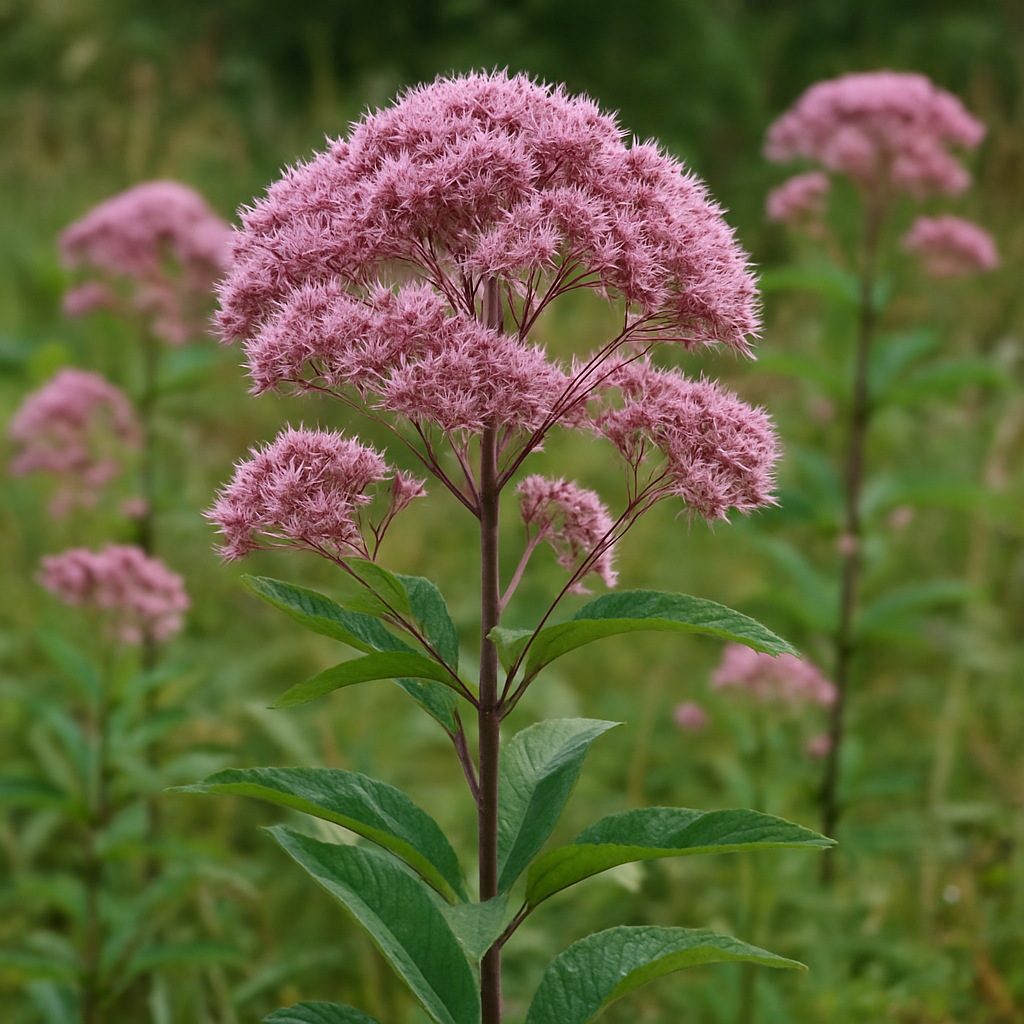
Joe Pye Weed (Eutrochium purpureum) is one of North America’s most impressive native wildflowers, known for its towering height, clusters of dusty pink to mauve blossoms, and longstanding place in traditional herbalism. Found throughout the eastern and central United States and parts of Canada, this hardy perennial flourishes in moist meadows, woodland edges, marshes, and along stream banks, where it often reaches heights of five to seven feet. During late summer, its broad flower heads attract bees, butterflies, and other beneficial pollinators, making it a favorite in both natural landscapes and native gardens.
The common name is believed to honor Joe Pye, a Native American healer who, according to tradition, used the plant in herbal preparations during the eighteenth century. While the exact details of his life remain uncertain, the story has endured for generations and reflects the herb’s deep connection to Indigenous botanical knowledge. European settlers later adopted many of these traditional practices, and Joe Pye Weed became a familiar plant in American herbal medicine.
Historically, the root was considered the most valuable portion of the plant and was commonly harvested in autumn after the growing season had ended. Herbalists prepared it as teas, decoctions, tinctures, and powdered root, incorporating it into a variety of traditional wellness practices. Over time, Joe Pye Weed earned a respected place in both Native American and Western herbal traditions because of its versatility and longstanding reputation.
Traditional Herbal Uses
Traditional herbalists have long associated Joe Pye Weed with healthy urinary tract function and normal fluid balance. It was frequently included in herbal formulas intended to support kidney and bladder wellness and was often used seasonally as part of traditional cleansing practices. Many historical herbal texts also describe its use during periods of seasonal discomfort, where it was valued for promoting overall wellness and recovery.
Beyond urinary support, the herb has traditionally been incorporated into preparations intended to support joint comfort and general vitality. Herbal practitioners often viewed Joe Pye Weed as a botanical that encouraged the body’s natural balance during times of physical stress. While these uses reflect centuries of traditional knowledge, they remain part of historical herbal practice rather than established medical treatment.
Today, Joe Pye Weed is appreciated not only for its herbal history but also for its ecological importance. Its large nectar-rich flowers provide valuable food for monarch butterflies, swallowtails, native bees, and countless other pollinators during the late summer months when many other nectar sources begin to fade. Whether growing wild along a quiet stream or cultivated in a medicinal herb garden, Joe Pye Weed continues to represent the enduring relationship between North American plants and traditional herbal wisdom.
Common Uses
Traditionally used to support urinary tract wellness, healthy fluid balance, seasonal wellness, joint comfort, general vitality, and traditional cleansing practices.
Storage
Store in a cool, dry place away from direct sunlight. Keep containers tightly sealed to preserve freshness and maintain the herb’s natural qualities.
About Underground Apothecary LLC
At Underground Apothecary LLC, we believe the wisdom of traditional herbalism deserves to be preserved and shared responsibly. Our carefully selected botanicals are sourced with quality in mind and offered for educational purposes, honoring the rich history of herbal traditions while encouraging informed and responsible use.
FDA Disclaimer
These statements have not been evaluated by the Food and Drug Administration. This product is not intended to diagnose, treat, cure, or prevent any disease. The information provided is for educational purposes only and reflects historical and traditional herbal use.