The Different Types of Herbal Lavender

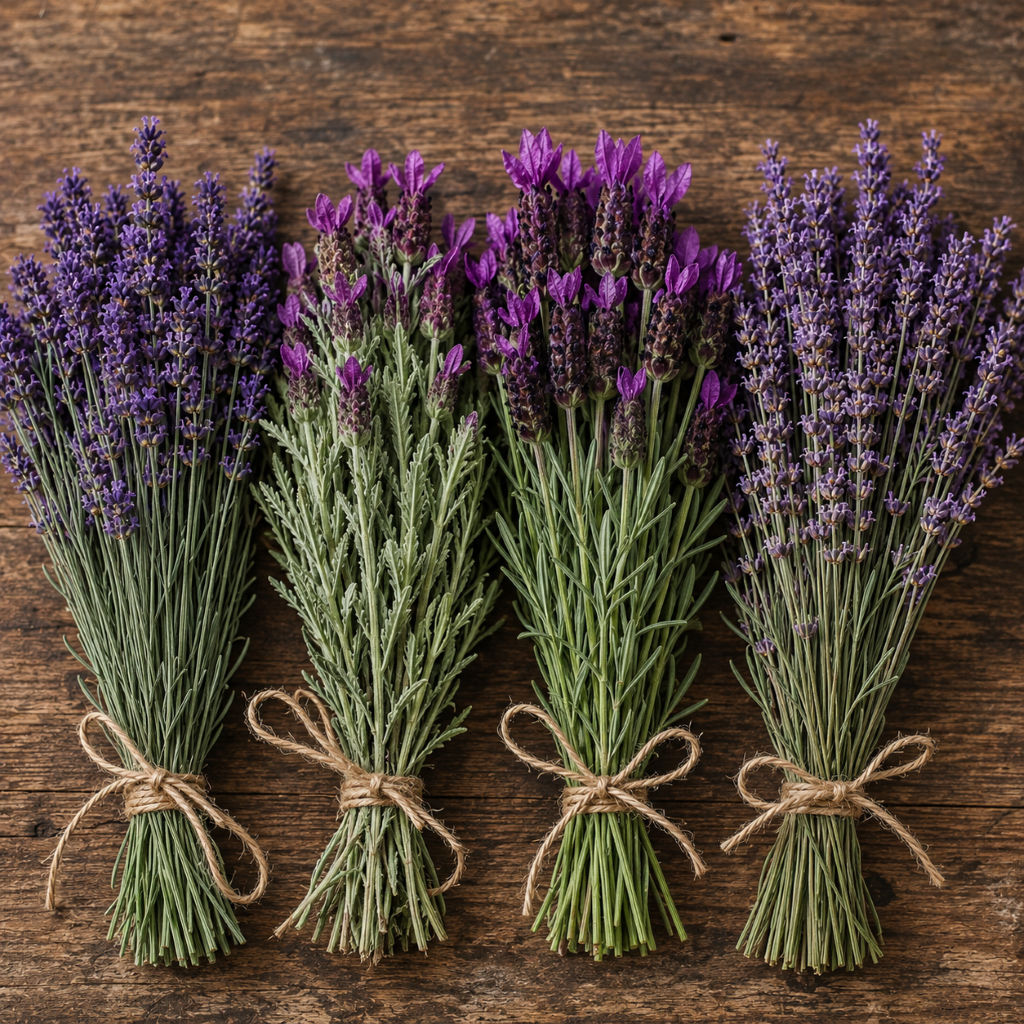
Lavender is often spoken of as if it were a single, unified plant—one scent, one purpose, one experience. In truth, it is a diverse family of botanicals, each carrying its own character, chemistry, and traditional role within herbal practice. To fully understand is to look beyond the familiar fragrance and into the subtle distinctions that shape how each variety is used, respected, and prepared.
Across fields, hillsides, and cultivated gardens, lavender has long been gathered not only for its aroma, but for its presence. It is a plant tied to calm, to cleansing, and to the quiet restoration of balance. Yet not all types offer this in the same way. The differences matter, particularly when intention is involved.
English Lavender — Lavandula angustifolia
English lavender is the most recognized and widely used of all varieties, known for its soft, sweet, and unmistakably floral scent. It is this gentler profile that has made it the foundation of traditional calming preparations. When people speak of lavender as a soothing herb, it is almost always this species they are referring to.
Historically, it’s been used to ease tension, promote rest, and support the nervous system. It lends itself well to teas, oils, tinctures, and infused blends intended for relaxation. Its nature is not overpowering, but steady, working quietly to soften the edges of stress and bring the body back into a more settled state.
In both traditional and modern practice, it remains the preferred choice when the goal is calm, sleep, or emotional balance.
French Lavender — Lavandula dentata
French lavender presents a different expression of the plant entirely. Its scent is more herbal, slightly sharper, and less overtly sweet than its English counterpart. The leaves are distinct as well, with a toothed or serrated appearance that sets it apart visually in the garden.
While still aromatic, this variety has not traditionally held the same place in internal herbal preparations. Instead, it is more often valued for its presence in ornamental settings and for lighter topical or aromatic uses. Its profile is less about deep calming and more about subtle environmental fragrance and visual appeal.
This variety reflects a shift from medicinal prominence to supportive and atmospheric use within the apothecary.
Spanish Lavender — Lavandula stoechas
Spanish lavender carries a boldness that sets it apart immediately. Its scent is stronger, more resinous, and often described as camphorous. Visually, it is recognizable by its distinctive flower heads, which differ from the more familiar spikes of English lavender.
Traditionally, this variety has been approached with more caution. Its potency lends itself to external applications, aromatic use, and ritual or environmental cleansing rather than internal consumption. In older herbal traditions, it was sometimes used in preparations meant to purify or protect, aligning more with function than comfort.
This is a lavender that demands respect. It is not the gentle companion of evening teas, but rather a more assertive presence within the herbal landscape.
Lavandin — Lavandula x intermedia
Lavandin is a hybrid, created by crossing English lavender with spike lavender. The result is a plant that produces a greater yield of essential oil, with a scent that is stronger, sharper, and more camphor-forward than English lavender.
Because of its potency and abundance, lavandin is widely used in soaps, cleaning products, and functional blends where a more pronounced fragrance is desired. It carries the recognizable essence of lavender, but with an edge that makes it better suited for practical applications rather than delicate internal use.
In the apothecary, lavandin represents efficiency and strength. It is not subtle, and it is not meant to be. Its place is in work that requires presence, clarity, and lasting impact.
Choosing with Intention
To work with lavender is to choose more than a scent—it is to select a specific quality of experience. Each variety carries its own rhythm, its own strength, and its own role within traditional practice.
English lavender offers softness and restoration.
French lavender provides a lighter, more atmospheric presence.
Spanish lavender brings intensity and function.
Lavandin delivers strength and utility.
Understanding these differences allows for more intentional use, whether in preparation, ritual, or daily practice. The name “lavender” may be shared, but the nature of each plant is distinct.
In the end, the apothecary is not built on assumption, but on awareness. And even among the most familiar herbs, there is always more to learn.
Additional Reading
Visit our Herb Library for a wealth of information