Yarsagumba: The Caterpillar Fungus of the Himalayas

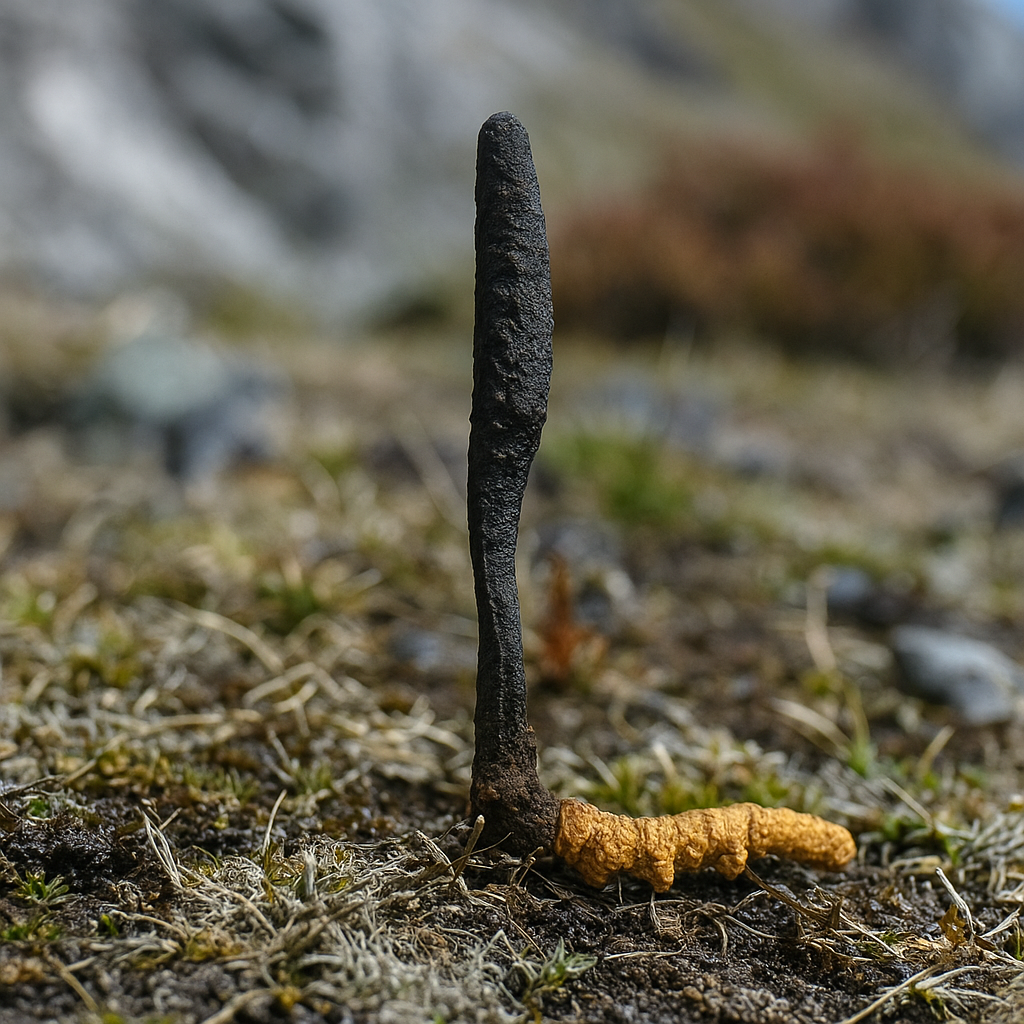
arsagumba, more commonly spelled yarsagumba or yartsa gunbu, is one of the most unusual substances used in traditional Asian medicine. Known scientifically as Ophiocordyceps sinensis and historically as Cordyceps sinensis, it is neither simply an herb nor an ordinary mushroom. It is a parasitic fungus whose life cycle is intimately connected with the larvae of ghost moths living beneath the soil of the Tibetan Plateau and surrounding Himalayan regions.
The fungus infects a caterpillar underground, gradually consumes and replaces much of its internal tissue, and eventually produces a slender fruiting body that emerges from the caterpillar’s head and pushes above the soil. What is traditionally collected is the combined fungal structure and mummified caterpillar.
Its Tibetan name is commonly translated as “summer grass, winter worm,” a remarkably accurate description of its appearance and life cycle. During winter it exists beneath the ground within its insect host. As temperatures rise, the dark fungal stalk emerges among the short alpine vegetation.
Few traditional medicinal materials have a natural history quite like yarsagumba.
From Himalayan Medicine to an International Commodity
Yarsagumba has a long history in Tibetan and traditional Chinese medicine. Historical sources describe preparations made from the caterpillar fungus for weakness, fatigue, respiratory complaints, sexual function, and recovery from illness.
Its reputation eventually spread far beyond the communities that traditionally gathered and used it.
Today, wild Ophiocordyceps sinensis is an extraordinarily valuable biological commodity. In some Himalayan communities, the brief annual collecting season provides a substantial portion of household income. Thousands of collectors may travel into high-altitude grasslands during the harvesting season, carefully searching the ground for the tiny fungal stalks.
Individual specimens are dug from the soil by hand with the caterpillar and fungal stalk intact.
The combination of limited habitat, difficult harvesting, international demand, and declining availability has made genuine wild yarsagumba extremely expensive.
Traditional Uses of Yarsagumba
Traditional Tibetan and Chinese medical systems have used yarsagumba primarily as a restorative substance.
Historically, it has been associated with physical stamina, fatigue, respiratory function, recovery following illness, kidney function, and sexual vitality. Traditional Chinese medicine classifies Cordyceps sinensis as a substance associated particularly with the lung and kidney systems.
Its reputation as a tonic eventually contributed to modern marketing of Cordyceps products for athletic performance, energy, endurance, libido, and general vitality.
Scientific research has identified numerous compounds in Cordyceps-related fungi, including nucleosides, polysaccharides, sterols, and other biologically active constituents. However, laboratory findings and traditional use do not establish that wild yarsagumba can treat the numerous medical conditions sometimes attributed to it.
Research is further complicated by an important fact: many modern products sold as “Cordyceps” are not actually wild Ophiocordyceps sinensis.
Yarsagumba Is Not the Same as Every Cordyceps Product
The name Cordyceps is used very loosely in the supplement and herbal industries.
True wild yarsagumba refers to the natural caterpillar-fungus complex of Ophiocordyceps sinensis. Because genuine specimens are scarce and expensive, commercial products frequently contain cultivated fungal material instead.
Some products use cultivated mycelium associated with O. sinensis, while many others use Cordyceps militaris, a different species that can be cultivated much more easily.
Cordyceps militaris is a legitimate medicinal fungus with its own history and research, but it should not be represented as wild Himalayan yarsagumba. The two materials are biologically and commercially distinct.
This distinction is especially important when purchasing expensive specimens, powders, or extracts advertised as genuine yarsagumba.
The Problem of Overharvesting
The extraordinary value of yarsagumba has created serious ecological and economic pressures in the regions where it grows.
Wild Ophiocordyceps sinensis occurs in high-altitude ecosystems across the Tibetan Plateau and Himalayas. Harvesting takes place during a relatively short season, and collectors often return to the same alpine meadows year after year.
Heavy harvesting combined with environmental and climatic changes has contributed to concern about declining populations. The fungus has consequently become an important example of how worldwide demand for traditional natural medicines can affect fragile ecosystems and the communities dependent upon them.
For this reason, responsible sourcing matters considerably more with yarsagumba than it does with many commonly cultivated medicinal plants.
Common Uses
Traditional preparations have used whole dried yarsagumba in foods, broths, teas, tonics, and alcohol-based preparations. In regions where it originated, it could be incorporated into restorative foods rather than consumed solely as a concentrated medicinal extract.
Modern Cordyceps products are more commonly sold as powders, capsules, tinctures, or concentrated extracts.
Consumers should pay close attention to the species and material listed on a product. “Cordyceps,” “Cordyceps militaris,” cultivated Cordyceps mycelium, and genuine wild Ophiocordyceps sinensis should not automatically be considered interchangeable.
Safety and Precautions
Research into the safety of yarsagumba and related Cordyceps preparations remains limited compared with commonly used foods and medicines.
People taking anticoagulant or antiplatelet medications should use caution because Cordyceps preparations may potentially influence blood clotting. There are also concerns about possible effects on blood sugar, making professional guidance appropriate for people using diabetes medications.
Because Cordyceps preparations may influence immune activity, people with autoimmune disorders, organ transplants, or those taking immunosuppressive medications should discuss their use with a qualified healthcare professional.
Pregnant or breastfeeding individuals should avoid medicinal use unless advised otherwise by an appropriately qualified healthcare professional because adequate safety information is lacking.
Quality and authenticity are additional safety concerns. High prices create a strong incentive for substitution, adulteration, and misidentification. Purchasing material from a reputable supplier that can establish species identity and appropriate testing is particularly important.
Storage
Whole dried yarsagumba and dried Cordyceps products should be stored in tightly sealed containers away from moisture, excessive heat, and direct sunlight. Fungal materials can deteriorate or develop mold when exposed to moisture, so products showing unusual discoloration, odors, or evidence of moisture damage should not be used.
Powders generally have greater exposure to air than intact material and should be kept particularly well sealed.
About Underground Apothecary LLC
Underground Apothecary LLC is an independent herbal company focused on traditional plant preparations and straightforward herbal education. Our Herb Library explores the history, traditional uses, preparation, and practical considerations surrounding the plants, fungi, and other natural materials that have been part of traditional healing practices for generations.
The information provided in our Herb Library is intended for educational purposes and to preserve knowledge of traditional practices. It is not intended to diagnose, treat, cure, or prevent any disease.
FDA Disclaimer: These statements have not been evaluated by the Food and Drug Administration. This information is provided for educational purposes only and is not intended to diagnose, treat, cure, or prevent any disease.